
World Binturong Day
Have some amazing photos to start your week

I usually do these photo-based posts on a Monday, but special circumstances in this case: today is World Binturong Day. Which, obviously, is just a random made-up thing, but it just so happens I really like binturongs, so why not? Not sure whether I’ll ever do a podcast episode about them, so they get a little celebration here.
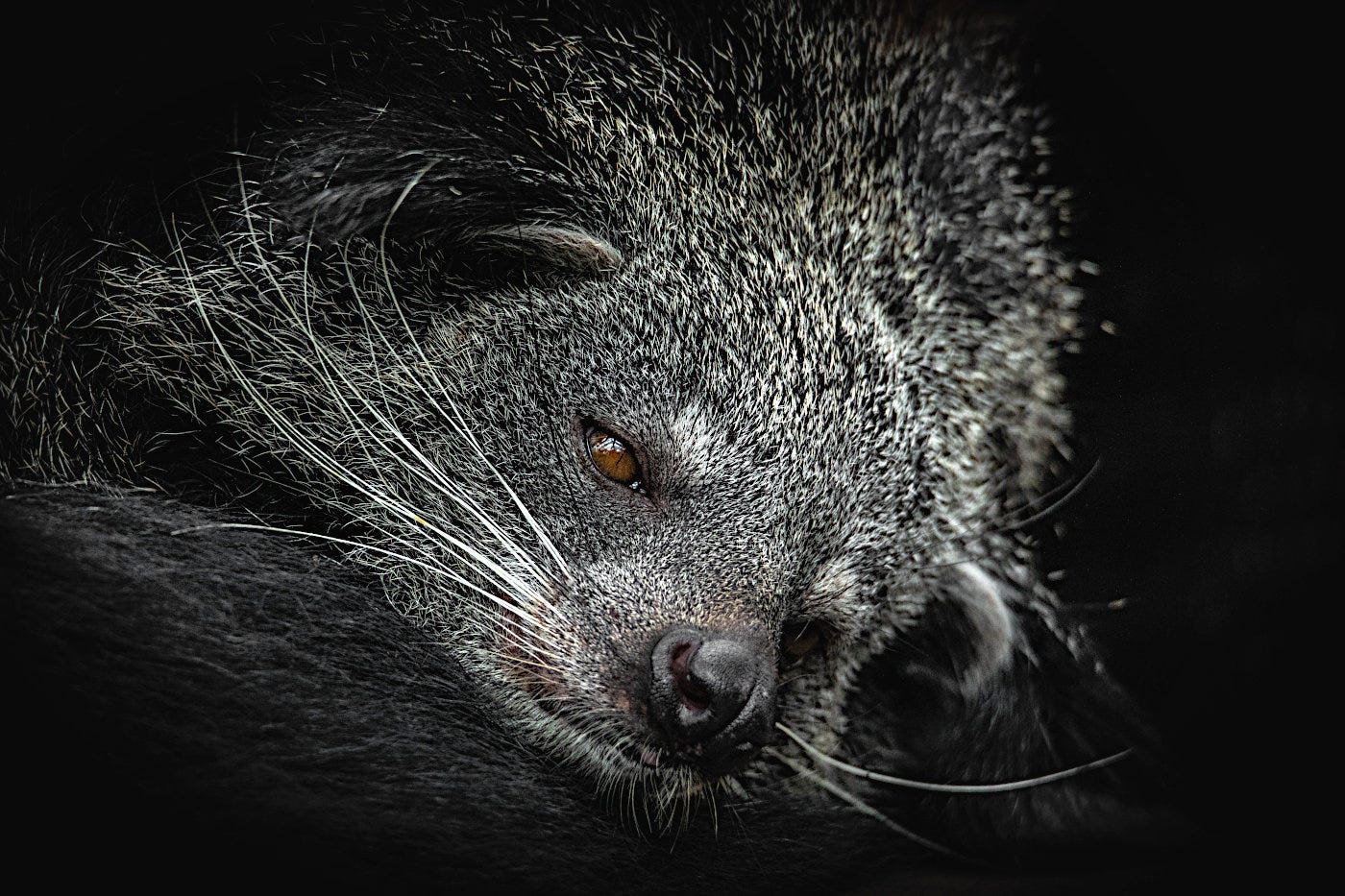
Viverrid carnivorans, so the same family as genets and civets and such, but very unusual ones, not least in appearance - sometimes called ‘bearcats’ because … well, look at them:
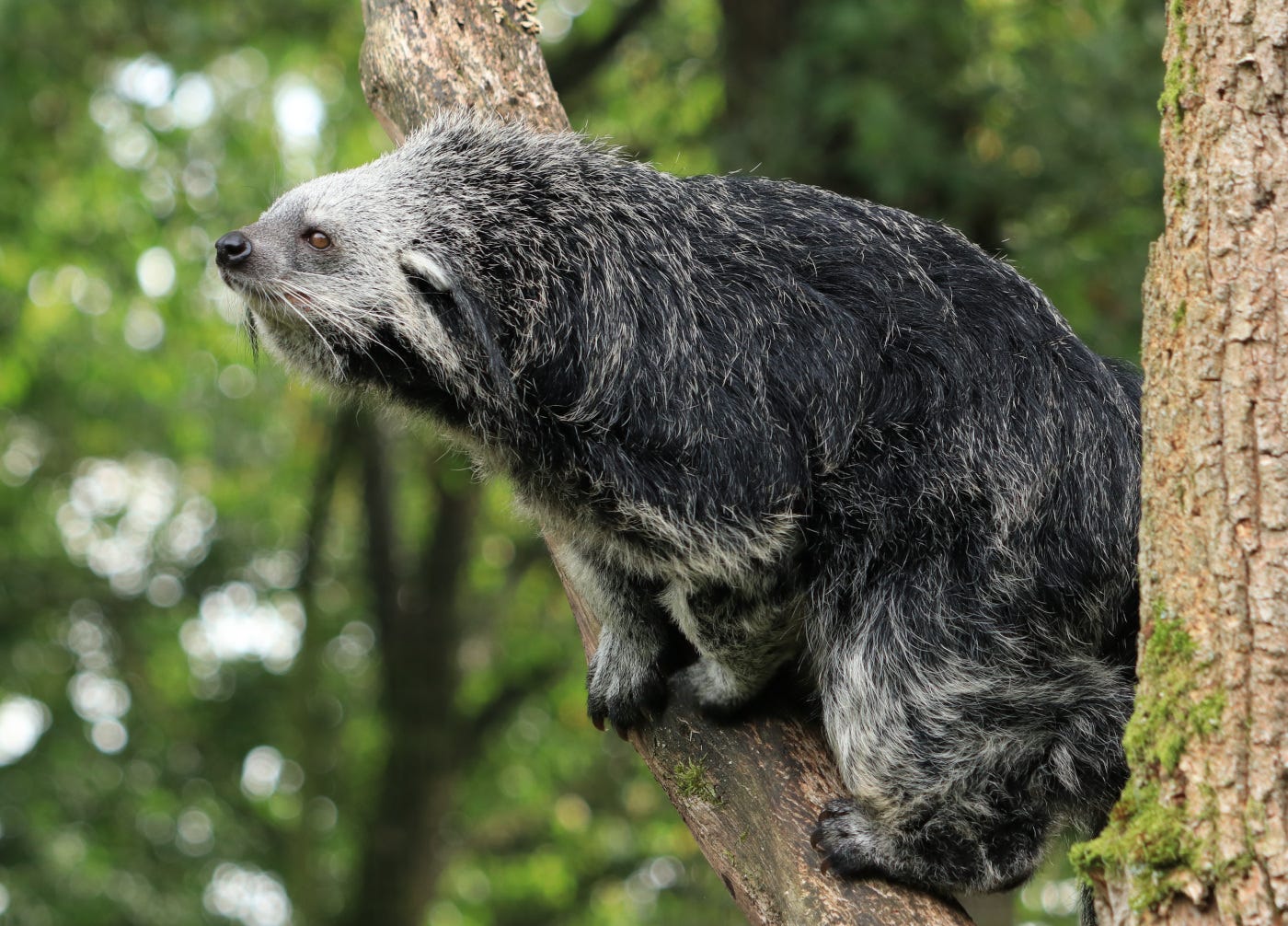
Very charismatic animals, although when I’ve seen them in zoos, as far as I can remember they’ve always been fast asleep, which is not charismatic behaviour. But I have seen one in the wild: way, way up clambering about in the branches of a huge tree, gorging itself on fruit. Which is precisely what you want to see, because defining binturong characteristics are that they’re highly arboreal, and that they - by carnivoran standards - eat huge amounts of fruit. They do eat some insects, animals etc., but most of their diet is vegetable matter, especially figs.
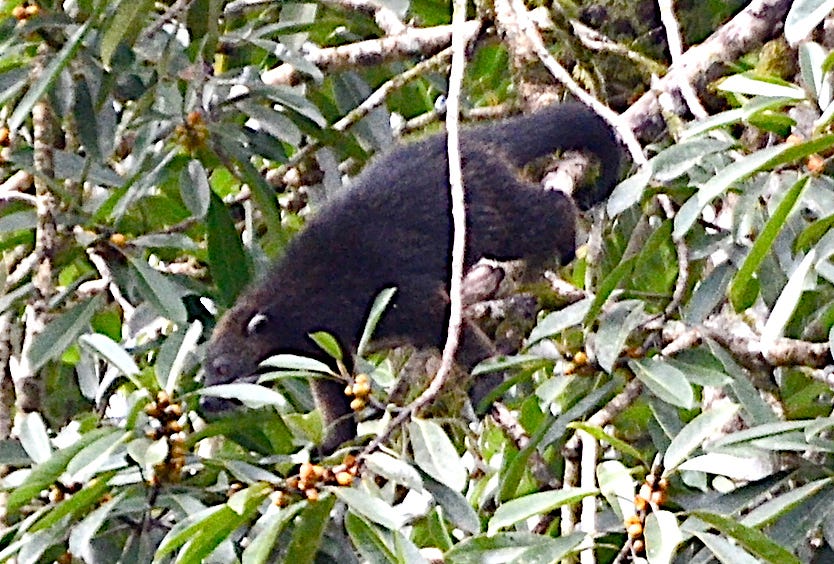
Photo: Jay Pruett, via iNaturalist, CC BY 4.0
You can see in that photo another sign of binturong unusualness: a prehensile tail, part of their adaptation to a life (mostly) in the trees. Something that’s demonstrated even more clearly by this captive binturong:
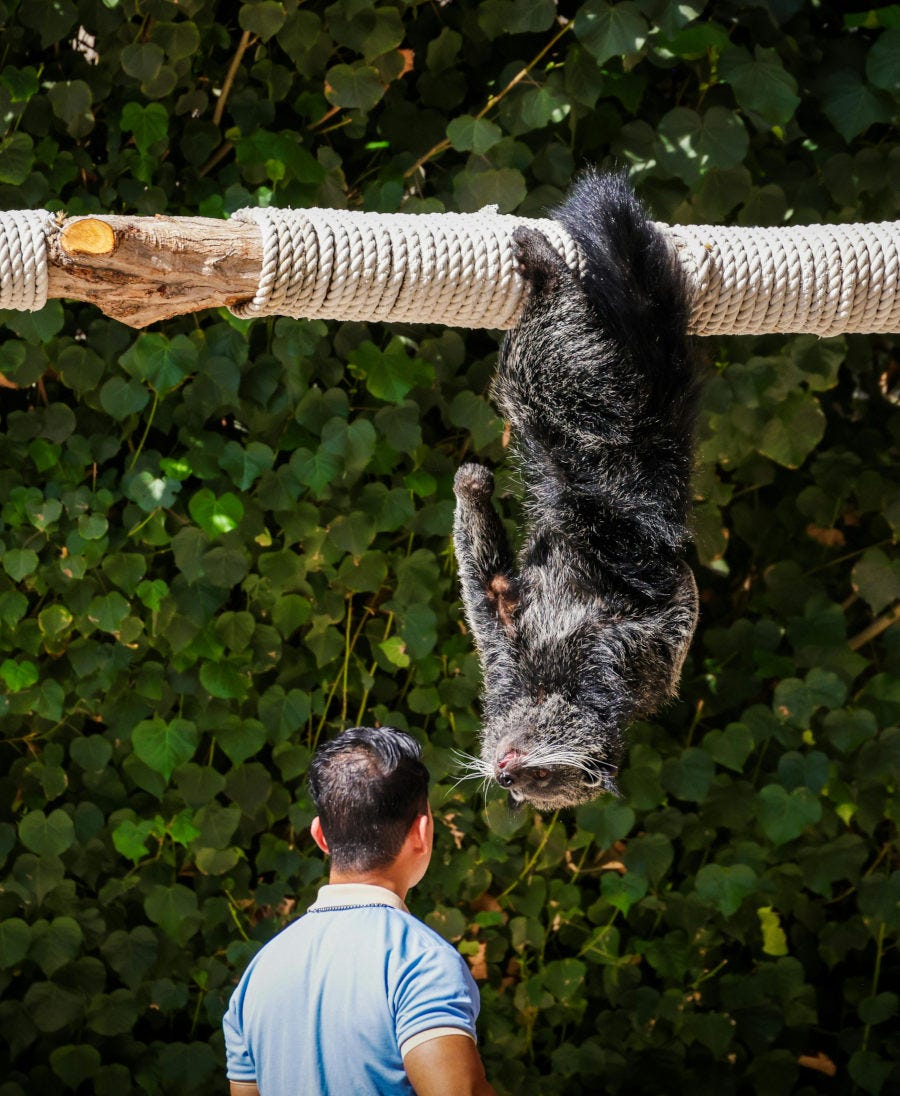
They’re not actually very agile climbers - slow and careful rather than nimble. As that photo shows they can be pretty big and chunky animals, but claws plus prehensile tail mean they do fine even high up in the rainforest canopy.
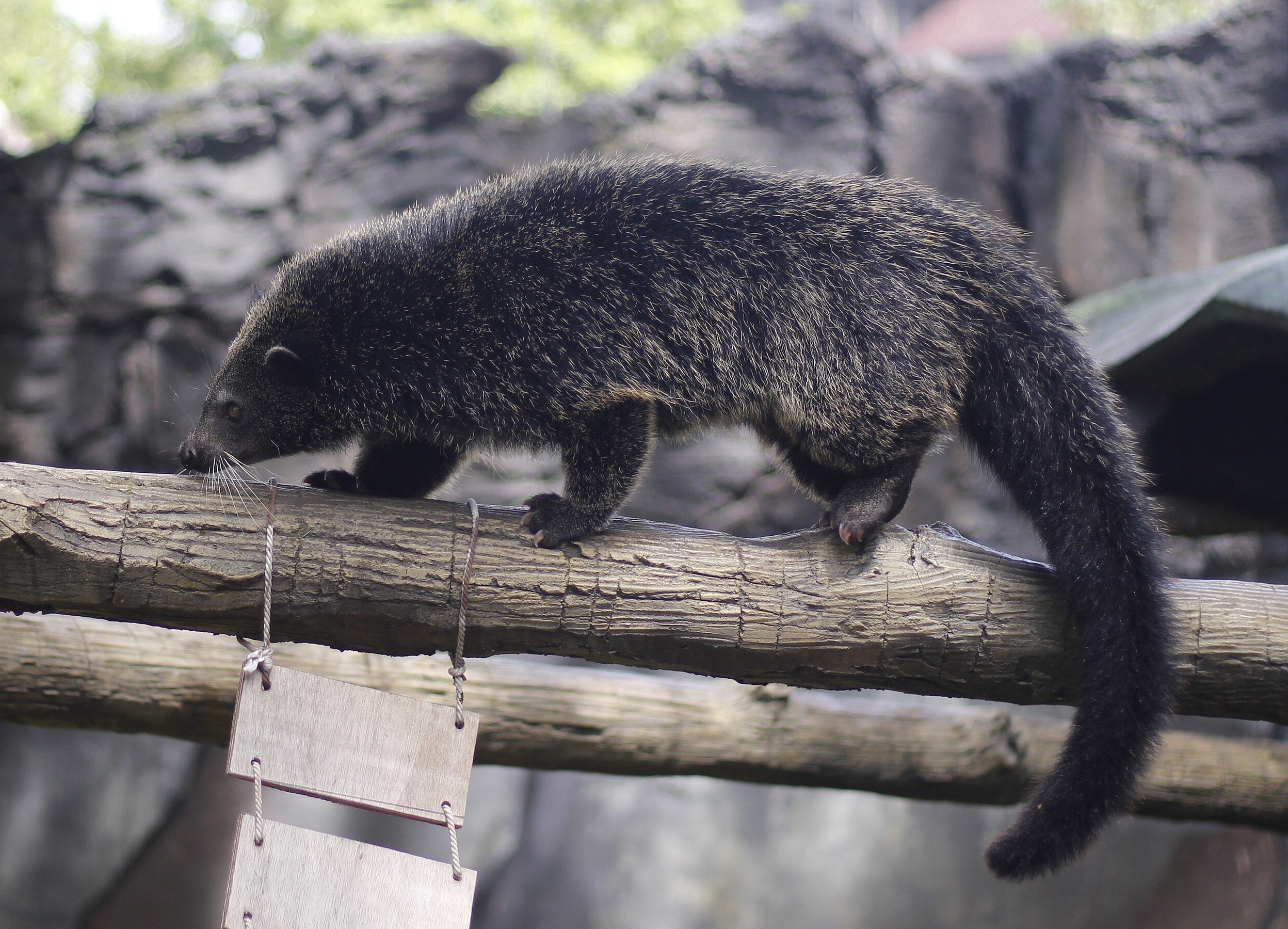
Amazing animals, found across a good chunk of South-East Asia, but only in areas with plenty of tree cover, ideally undisturbed by humans. Which is not a type of habitat that’s easy to find these days, so inevitably the binturong has become increasingly rare in many areas. Loss of forest cover, hunting and the pet trade have combined to drive its population down enormously. Which seems a shame.
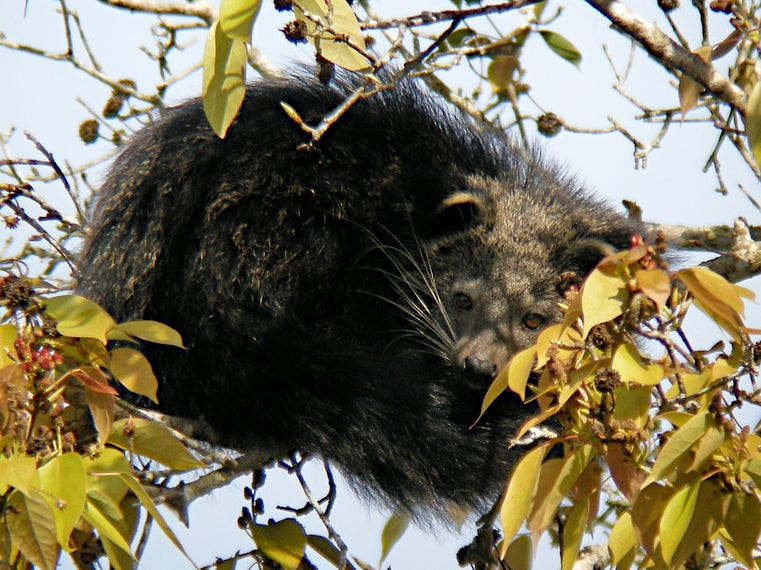
Photo: Ian Dugdale, via iNaturalist, CC BY 4.0